Every few years, the government reaches for the same toolbox to keep Singapore's property market stable. If you're buying or selling, understanding why these measures exist — and how they've stacked up over time — helps you read the market instead of being surprised by it. Here's the timeline of the major moves and what each one did.
Why cooling measures exist
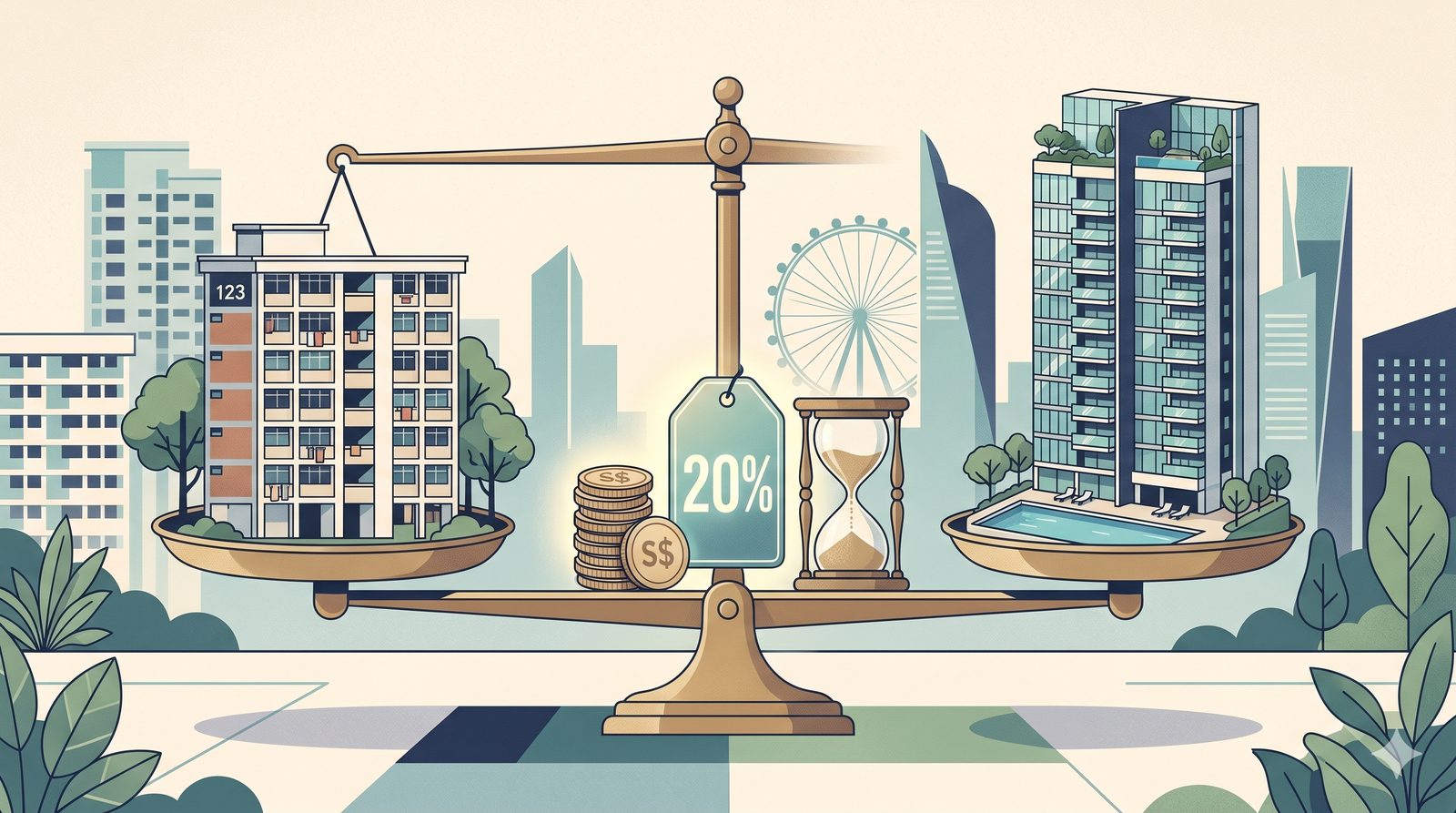
The aim is straightforward: keep housing affordable for Singaporeans, prevent speculative bubbles, and stop excessive borrowing. The main levers are ABSD (a tax on additional or foreign purchases), SSD (a tax on selling too soon), and financing limits like TDSR, MSR and LTV.
The major milestones
- 2011 — ABSD introduced. The first Additional Buyer's Stamp Duty, aimed mainly at foreign and multiple-property buyers.
- 2013 — TDSR framework. The Total Debt Servicing Ratio capped total debt repayments as a share of income — arguably the most structurally important measure, because it limits how much anyone can borrow.
- 2018 — ABSD raised & LTV tightened. Rates went up across the board and loan limits were trimmed.
- 2021 (Dec) — major ABSD hike. A significant round raising rates for second properties, foreigners and entities.
- 2022 (Sep) — tighter financing. The medium-term stress-test rate floor was raised, and a 15-month wait-out period was introduced for private owners downgrading to HDB resale.
- 2023 (Apr) — the big ABSD jump. Foreigner ABSD doubled to 60%; second-property ABSD for citizens rose to 20%, third-and-beyond to 30%. These are the rates still in force.
- 2024 (May) — 99-to-1 clawback. IRAS recovered around $60 million from buyers who used the contrived “100-sell-1” structure to dodge ABSD, with a 50% surcharge.
- 2025 (Jul) — SSD tightened. The Seller's Stamp Duty holding period was extended from 3 to 4 years and rates raised, to curb quick flipping.

Hey — quick hello, I’m Melvin
If we haven’t met: I’m Melvin Lau, a property strategist with PropNex (CEA R067207F). I don’t just open doors for viewings — I help homeowners sequence the big moves and run the numbers before they sign anything. Most of my work is exactly this kind of planning.
If any of this feels relevant to your own situation, just message me — no pitch, no obligation, happy to talk it through.
WhatsApp Melvin →What it all means for you today
The cumulative effect is a market where borrowing is capped (TDSR/MSR/LTV), buying additional or foreign property is expensive (ABSD up to 60%), and selling too soon is penalised (SSD up to 16% within four years). That's not a market for speculation — it rewards buyers who plan, hold, and sequence their moves deliberately.
None of this should scare you off. It just means the strategy matters more than the timing of a single transaction. The buyers who do well in this environment are the ones who understand the rules and build a plan around them — exactly the kind of planning I do with clients before they commit to anything. (The current ABSD figures sit at the heart of every upgrade decision — see my ABSD guide.)
Figures and rules as at June 2026, per IRAS, HDB, CPF and MAS. Rates, thresholds and policies are set by the authorities and can change — confirm current figures before acting.
Frequently asked questions
What are property cooling measures in Singapore?
They're government policies to keep housing affordable, prevent speculative bubbles and limit excessive borrowing. The main tools are ABSD (a tax on additional or foreign purchases), SSD (a tax on selling too soon), and financing limits like TDSR, MSR and LTV.
When was ABSD introduced in Singapore?
Additional Buyer's Stamp Duty was first introduced in 2011, targeting mainly foreign and multiple-property buyers. It has been raised several times since, most significantly in December 2021 and April 2023.
What did the April 2023 cooling measures change?
The April 2023 round doubled foreigner ABSD to 60%, raised second-property ABSD for Singapore Citizens to 20% and third-and-beyond to 30%. These ABSD rates remain in force in 2026.
What changed with SSD in July 2025?
The Seller's Stamp Duty holding period was extended from 3 years to 4 years, with raised rates, to discourage quick flipping. Selling private property bought on or after 4 July 2025 within 4 years now triggers SSD of up to 16%.
Why does the government keep introducing cooling measures?
To keep housing affordable for Singaporeans, prevent property bubbles and discourage over-leveraging. The measures are adjusted as market conditions change, tightening when prices or speculation run hot.
The first conversation is complimentary — we build a plan around the current rules so you buy and sell on the right side of them.
WhatsApp Melvin →