“Sell one, buy two” is one of the most talked-about property strategies in Singapore — and one of the most oversold. Done right, it can genuinely grow a couple's wealth. Done wrong, it stretches a family dangerously thin. Let me explain how it actually works, and then be honest about when it doesn't.
The basic idea
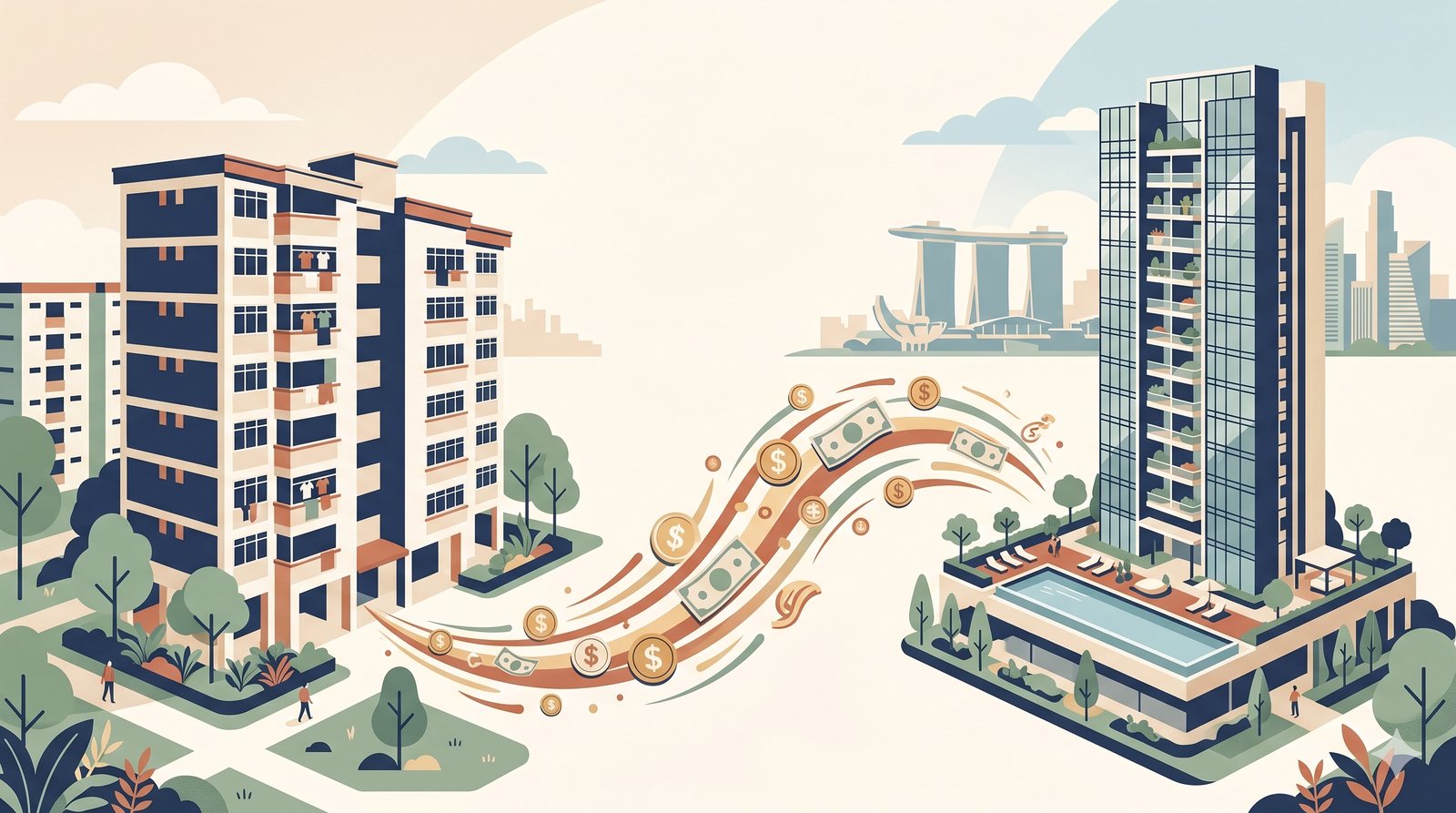
A married couple sells their existing home (often an HDB flat or a jointly-owned condo) and uses the proceeds to buy two properties instead of one — one in each spouse's sole name. The logic: each spouse is now a single-property owner, so neither pays the second-property ABSD, and the household ends up holding two appreciating assets and (often) one rental income stream.
The appeal is real: two properties can compound faster than one, and splitting ownership keeps each purchase ABSD-free at the point of buying.
What has to line up for it to work
- Two separate loans, two separate incomes. Each spouse must qualify for their own mortgage on their own income under TDSR. If one spouse can't service a loan alone, the plan stalls.
- Enough cash and CPF for two sets of downpayments, stamp duties and buffers — not just one.
- The sale proceeds from the first property must realistically cover the entry costs of two.
- A genuine plan for the second property — rental demand, holding power, an exit.

Hey — quick hello, I’m Melvin
If we haven’t met: I’m Melvin Lau, a property strategist with PropNex (CEA R067207F). I don’t just open doors for viewings — I help homeowners sequence the big moves and run the numbers before they sign anything. Most of my work is exactly this kind of planning.
If any of this feels relevant to your own situation, just message me — no pitch, no obligation, happy to talk it through.
WhatsApp Melvin →The honest risks
Here's the part the salesy version skips. Splitting into two properties means two mortgages, two sets of holding costs, and far less buffer if something goes wrong — a job loss, an interest-rate rise, a vacant rental. MAS has repeatedly cautioned against over-leveraging, and the cooling measures exist precisely because stretched buyers are vulnerable.
It also relies on both properties performing. If one sits vacant or a market dips, you're carrying two commitments on what may be one-and-a-half incomes. And the strategy assumes both spouses are comfortable each holding sole ownership and sole liability for a property.
“Sell one, buy two” isn't a magic trick — it's leverage. Leverage amplifies good outcomes and bad ones equally. It works for couples with strong, stable dual incomes and real buffers; it's dangerous for those without.
So — does it still work?
Yes, for the right household: two solid incomes, genuine cash buffers, a clear-eyed plan for both properties, and the temperament to handle two commitments. For everyone else, it's a strategy that looks great on a showflat whiteboard and feels very different during a rough patch. The only way to know which camp you're in is to run your actual numbers — honestly, with someone who'll tell you when the answer is no.
Figures and rules as at June 2026, per IRAS, HDB, CPF and MAS. Rates, thresholds and policies are set by the authorities and can change — confirm current figures before acting.
Frequently asked questions
What is the 'sell one, buy two' property strategy?
It's where a married couple sells their existing home and buys two properties instead of one — one in each spouse's sole name. Because each spouse then owns only one property, neither pays second-property ABSD, and the household holds two assets, often with one generating rental income.
Does 'sell one, buy two' still work in 2026?
It can, for couples with two strong, stable incomes, genuine cash buffers, and a real plan for both properties. The mechanics still hold, but it relies on each spouse qualifying for their own loan and being able to weather two sets of commitments.
What are the risks of 'sell one, buy two'?
Two mortgages and two sets of holding costs mean far less buffer if a job is lost, rates rise, or a rental sits vacant. It amplifies both gains and losses, which is why MAS cautions against over-leveraging. It suits households with strong dual incomes and reserves, not stretched buyers.
Do both spouses need to qualify for a loan separately?
Yes. Each property is bought in one spouse's sole name, so each spouse must qualify for their own mortgage on their own income under TDSR. If one spouse can't service a loan alone, the strategy doesn't work as intended.
Is 'sell one, buy two' ABSD-free?
At the point of purchase, yes — because each spouse buys as a single-property owner, neither pays the second-property ABSD on their respective purchase. But you still pay normal Buyer's Stamp Duty, and the strategy must be a genuine arrangement, not a contrived one.
The first conversation is complimentary — we run your real numbers and I'll tell you honestly whether it fits your situation.
WhatsApp Melvin →