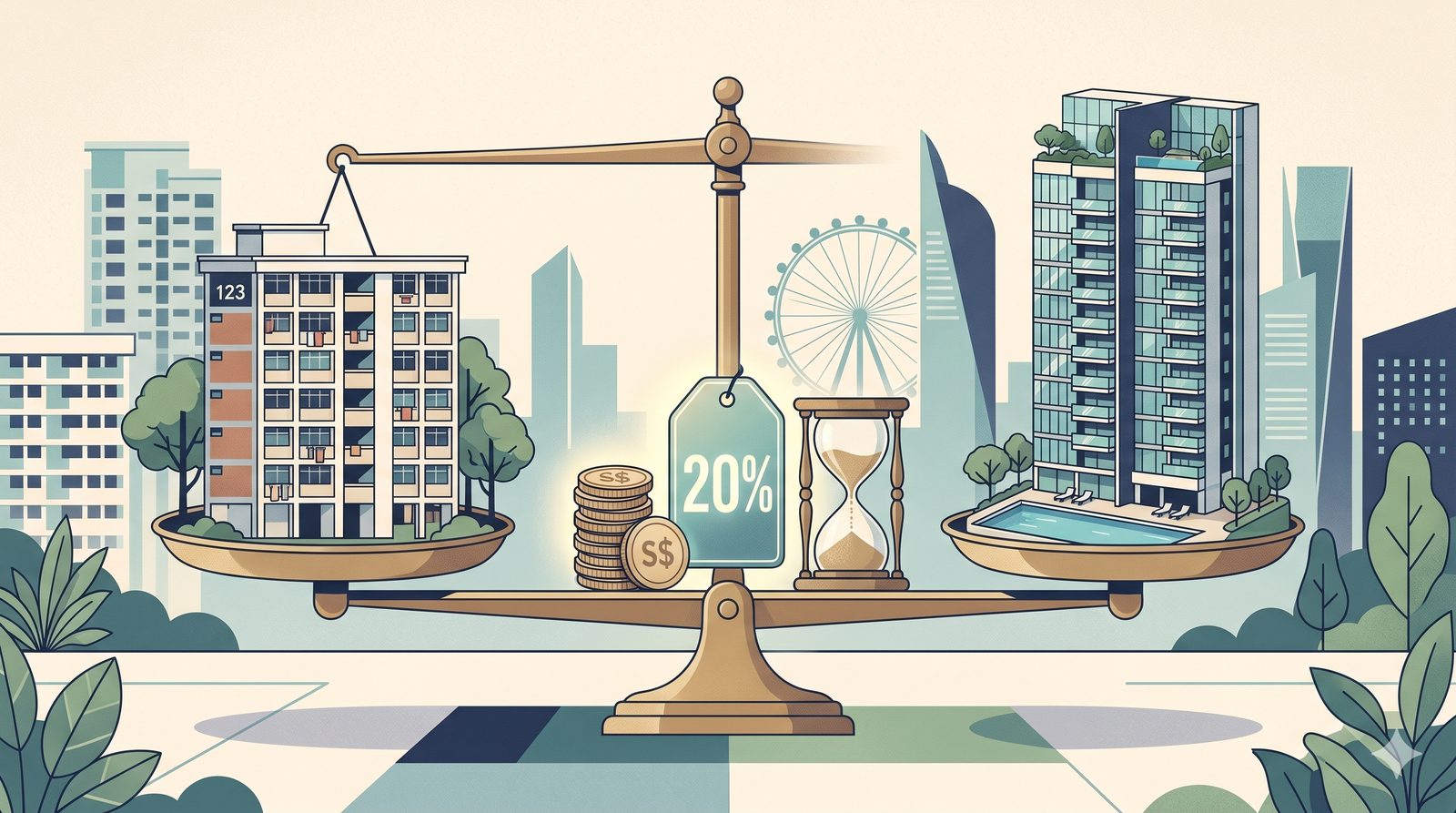
Every few weeks someone asks me the same thing: “Melvin, can I ‘decouple’ so my wife and I can buy a second property without paying that 20% ABSD?” The honest answer is: sometimes yes, sometimes it’s banned, and once — with the 99-to-1 version — it’s the kind of thing IRAS claws back with a 50% surcharge on top. So let’s clear it up properly.
What decoupling actually is
Decoupling (the formal term is a part-sale or transfer of part-share) is when one co-owner of a property sells their share to the other, so the property ends up fully owned by just one person. The point: the spouse who’s now out of that property becomes, in ABSD terms, a “first-time” owner again — free to buy a second property at 0% ABSD instead of the 20% a second-property buyer would pay.
That’s the whole mechanism. One name comes off this property, so that name is “clean” for the next one.
The hard rule first: you cannot decouple an HDB flat
This is where most people’s plan dies before it starts. You cannot decouple an HDB flat to free up a name for a second property. HDB shut that door in April 2016 specifically to stop ABSD-dodging. Ownership shares on a flat can only change hands for a narrow set of genuine life events — marriage, divorce, death of an owner, financial hardship, renunciation of citizenship, or medical reasons — each assessed case by case. None of those is “I want to buy an investment condo.” So for upgrading purposes, treat HDB decoupling as simply not available.
So decoupling is a private property strategy. If your only property is an HDB flat, this article is planning for after you’ve moved into private — not something you can do now. (If that’s you, my piece on upgrading from HDB to condo is the more relevant read.)
How it works for private property — and what it costs
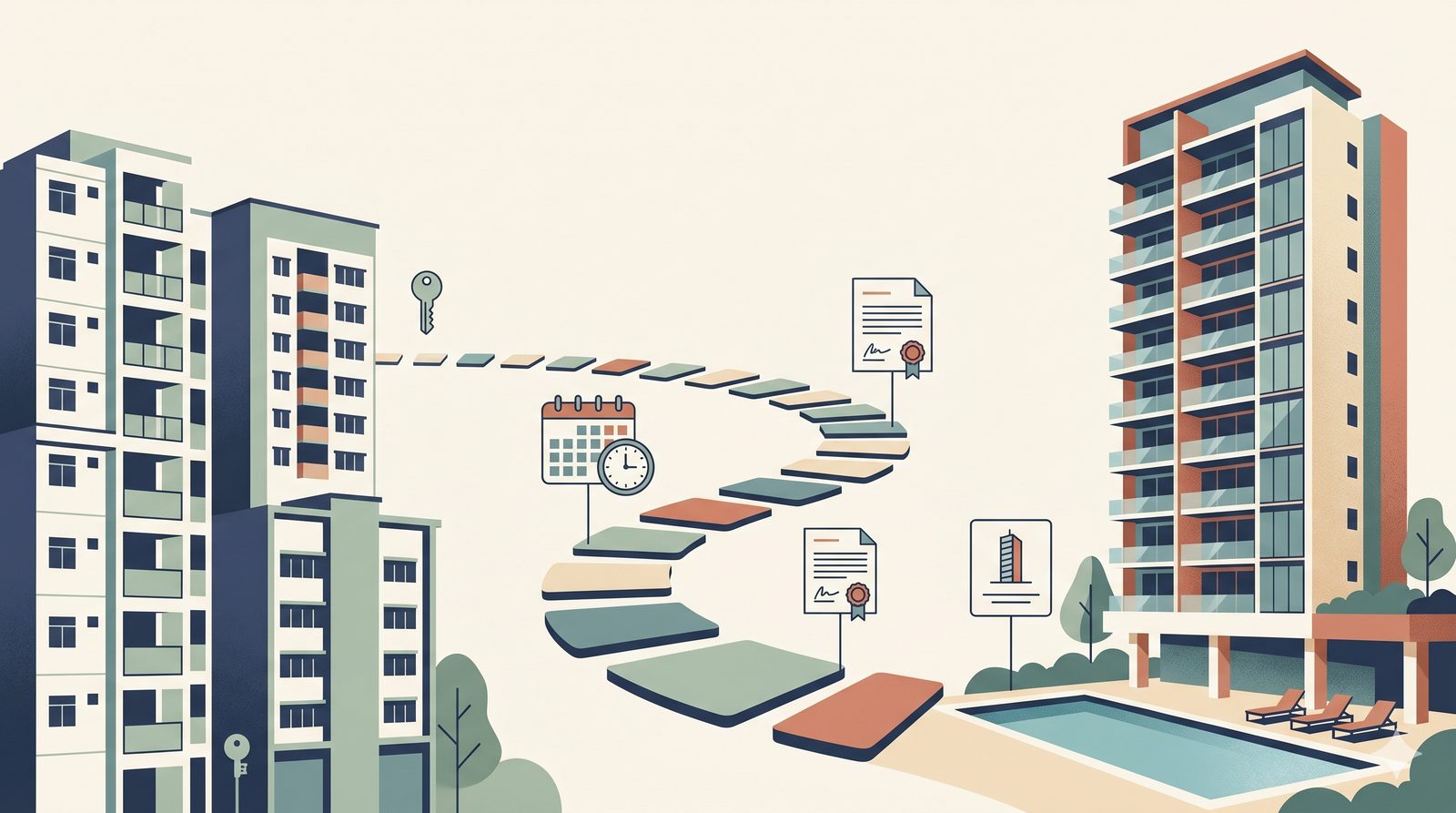
Say a couple jointly owns a private condo worth $2 million. To decouple, one spouse buys over the other’s half-share at market value — so they’re “buying” roughly $1 million worth of property.
Here’s what that triggers:
- Buyer’s Stamp Duty (BSD) on the transferred share, at market value. On a $1M half-share that’s tens of thousands of dollars — and on larger transfers it climbs fast (acquiring a $2.5M share lands at $94,600 in BSD).
- ABSD — but it depends on who’s buying. For a Singapore Citizen whose only property is this one, there’s 0% ABSD on the buyout. But a PR pays 5% even on a first property, and a foreigner pays 60% — and any buyer who already owns another property pays the full second-property ABSD on the acquired share. So the “no ABSD” outcome is really a Citizen-with-no-other-property outcome.
- Seller’s Stamp Duty (SSD) — the trap people forget. The spouse “selling” their share is disposing of property. If the property was bought within the last 4 years (for purchases on/after 4 July 2025), that disposal triggers SSD on their share — ranging from 4% up to 16% depending on how long it’s been held. Decouple too soon after buying and SSD can wipe out the whole benefit.
- Legal fees — typically $5,000 to $6,500, more than a normal resale, because the two spouses must be represented by separate law firms (to avoid conflict of interest). That’s not optional.
- Possible refinancing of the mortgage into one name — and the spouse keeping the property must pass TDSR on their income alone. If they can’t service the whole loan solo, the plan stalls here.
- CPF refund. The withdrawing spouse must refund the CPF they used on the property — principal plus accrued interest — back into their own CPF account. That’s cash locked away, not lost, but it surprises couples who didn’t budget for it.
So decoupling is never “free.” You spend real money up front (BSD + legal, sometimes SSD) to save the larger ABSD later. It only makes sense when the ABSD you’d avoid on the second property is comfortably bigger than the BSD + costs you pay to decouple — and when the numbers on the second purchase actually work.

Hey — quick hello, I’m Melvin
If we haven’t met: I’m Melvin Lau, a property strategist with PropNex (CEA R067207F). I don’t just open doors for viewings — I help homeowners sequence the big moves: when to sell, when to buy, how to grow a portfolio without overpaying tax or tripping a compliance wire. Most of my work is exactly this kind of planning, done before anyone signs anything.
If any of this feels relevant to your own situation, just message me — no pitch, no obligation, happy to talk it through.
WhatsApp Melvin →“What about that 99-to-1 thing?”
You may have read about buying a property 99% / 1% and later transferring the 1% to “decouple” cheaply — paying ABSD on just 1% instead of a full share. Let me be very direct: don’t.
In May 2024, IRAS clawed back around $60 million from buyers who used a specific two-step “100-sell-1” manoeuvre purely to dodge ABSD: one spouse buys 100% (or 99%), then within days sells a 1% sliver to the other so ABSD is charged on just that 1%. Where IRAS finds a transaction was contrived solely to reduce ABSD with no genuine commercial purpose, it can disregard the arrangement, recover the full unpaid duty, and add a 50% surcharge on top — plus interest. A $300,000 ABSD someone tried to shrink can come back as $450,000+.
To be precise: it isn’t the 99/1 ownership ratio itself that’s illegal — couples legitimately hold property in unequal shares for real reasons. It’s the contrived two-step transaction designed purely to avoid ABSD that IRAS penalises. A genuine, full part-sale at market value (real decoupling) is legal and well-established. The “100-sell-1” hack is the one getting people audited — I won’t structure one, and you should walk away from anyone who pitches it as clever.
So when does decoupling actually make sense?
It’s worth it in fairly specific situations — generally when all of these line up:
- You own (or will own) private property, not just an HDB flat.
- The ABSD you’d save on the planned second property clearly exceeds the BSD + legal cost of decoupling.
- The spouse taking full ownership can service the whole mortgage on their own income (the loan gets reassessed into one name).
- You have a genuine plan for the second property — own-stay, rental, asset progression — not just a tax manoeuvre.
When those align, decoupling is a clean, legal way to grow a property portfolio. When they don’t, the BSD and legal fees quietly eat the benefit, and you’ve spent five figures to move money between your own two names.
That’s exactly the kind of math I run with clients before anyone commits — because the answer genuinely flips depending on your property values, your incomes, and your timeline. You can start with a free valuation here so we’re working off real numbers, not estimates.
Figures and rules as at June 2026, per IRAS and HDB. BSD tiers, ABSD rates and the rules around part-sales are set by the authorities and can change — confirm current figures with IRAS or your conveyancing lawyer before acting.
Frequently asked questions
Can I decouple my HDB flat to avoid ABSD?
No. HDB blocked decoupling for ABSD purposes in April 2016. Ownership shares on a flat can only change for genuine life events — marriage, divorce, death, financial hardship, renunciation of citizenship or medical reasons — never to free up a name for an investment property. Decoupling is effectively a private-property strategy only.
How much does it cost to decouple a private property?
Expect Buyer’s Stamp Duty on the transferred share at market value (e.g. acquiring a $2.5M share is $94,600 in BSD), plus legal fees of roughly $5,000–$6,500 — higher than a normal resale because each spouse must use a separate law firm. Watch for SSD if the property was bought within the last 4 years, and the CPF refund (principal plus accrued interest) the withdrawing spouse must make.
Is decoupling legal in Singapore?
Yes — a genuine part-sale of private property at market value is legal and established. What IRAS penalises is the contrived “100-sell-1” two-step transaction used solely to avoid ABSD: in May 2024 it clawed back about $60 million, adding a 50% surcharge on the unpaid duty. The 99/1 ratio itself isn’t illegal; the avoidance scheme is.
Does the spouse buying over the share pay ABSD?
For a Singapore Citizen whose only property is the one being decoupled, no ABSD applies on the buyout — just BSD. But a PR pays 5% even on a first property, a foreigner pays 60%, and any buyer who already owns another property pays the full second-property ABSD on the acquired share. The order and the profile of the buyer both matter.
When is decoupling worth it?
When you own private property, the ABSD you’d save on a planned second purchase clearly exceeds the BSD and legal costs of decoupling, the remaining owner can service the full mortgage alone, and you have a real use for the second property. If any of those is shaky, the costs often outweigh the benefit.
The first conversation is complimentary — we run the actual decoupling math against your numbers before you spend a cent.
WhatsApp Melvin →